When talking about the tallest building in the world, a common question is how much did it cost to buid the Burj Khalifa? Building this skyscraper required a large financial investment due to its vast size, complexity, and unique design. The project took more than six years to complete, and the total construction costs reached record levels. The overall cost of building the Burj Khalifa was an astonishing $1.5 billion. This huge amount includes different expenses such as design, materials, labor, and project management. Let us explore it in more details in this guide on Indubaimall.
Official construction cost
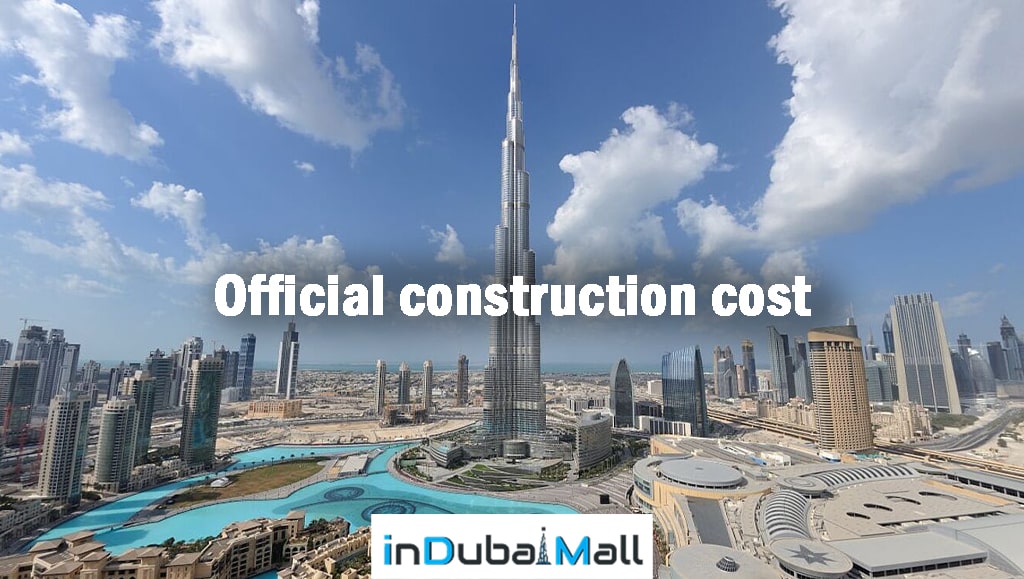
How much did it cost to build the Burj Khalifa? Here is a straightforward summary of the official construction expenses for the Burj Khalifa, and they are featuring amounts in USD, along with information on the original budget compared to the actual spending. Improvements in design, unprecedented height, cutting-edge engineering systems and increasing material costs during building cause the initial budget was changed.
Total Figure: $1.5 Billion breakdown
The financial scale of building the Burj Khalifa is astonishing with overall costs reaching $1.5 billion. This total includes several elements such as design fees, material purchases, labor expenses, project management costs, and additional expenditures. In spite of the significant investment needed, the Burj Khalifa serves as a symbol of Dubai’s economic strength and its capacity to pursue ambitious projects internationally.
Initial budget vs. final spend
The initial budget of Burj Khalifa construction was much lower, and it is often mentioned as around US $876 million. However, the final expenses showed a rise because of higher material costs, design modifications, and actual construction challenges, leading to an increase of about 70–80% compared to the initial estimate. The final construction cost was about US $1.5 billion, which means the project went well over its original budget.
Currency context: AED 5.5 Billion
The total construction cost of the Burj Khalifa is commonly reported to be approximately US $1.5 billion. It is roughly equivalent with AED 5.5 billion based on the UAE’s fixed exchange rate; this estimate is referenced by various sources. The conversion rate between USD and AED is determined by the standard fixed rate that is established by the UAE, which is 3.67 AED for every 1 USD.
Major cost components
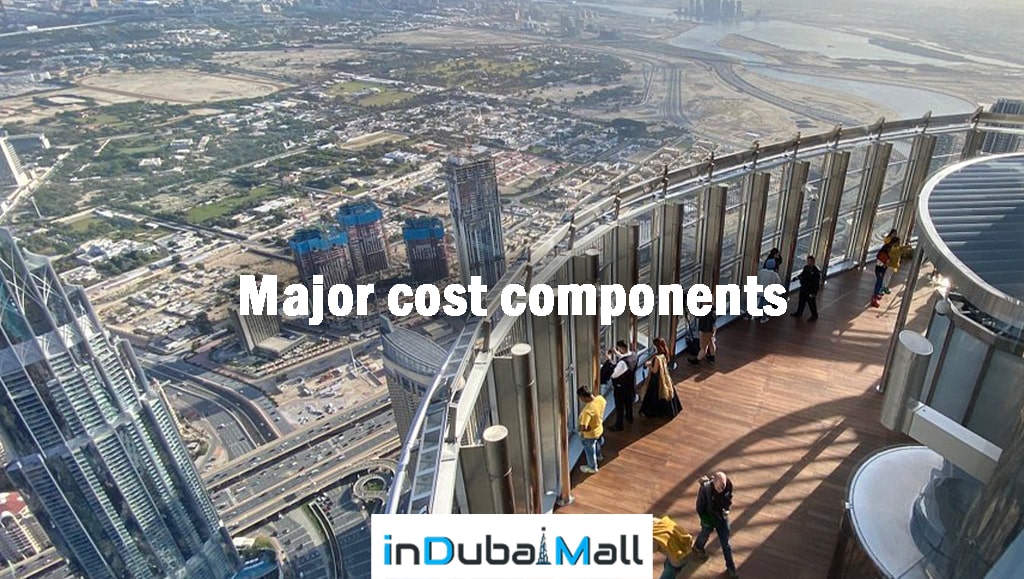
The primary cost elements associated with the construction of the Burj Khalifa can be categorized into several significant areas. The most substantial portion was allocated to the structural works, which encompass the reinforced concrete core, foundations, and steel components required to sustain the unprecedented height. Let’s talk about them in the following parts.




Foundation: $150 Million Engineering feat
The foundation covered about 150 million of the Burj Khalifa’s cost. The sandy soil in Dubai required deep reinforcement, because it was achieved by installing 194 friction piles that were driven 50 meters into the ground. Engineers developed special high-strength concrete mixes that can endure significant pressure. To combat the high temperatures in the Gulf, concrete was poured at night, and ice was added to control the drying process. A custom high-pressure pump was created to handle the extreme elevation. These steps resulted in a foundation strong enough that can support the tower’s great height and weight.
Concrete and steel: 330000workers and 22M man-hours
A large portion of the expenses for the construction of Burj Khalifa was because of labor. It was with 330,000 workers that were contributing more than 22 million man-hours. The team included concrete workers, steelwork installers, exterior building experts, high-rise workers, and mechanical engineers. Continuous day and night shifts were necessary to keep the project on track. As the tower rose higher, the work became slower, riskier, and more labor-intensive. Communication among multinational teams, safety measures, and extensive project management significantly increased costs. In 2006, press reports showed that skilled carpenters at the site made £4.34 per day, while labourers earned £2.84.
Challenges that spiked the price
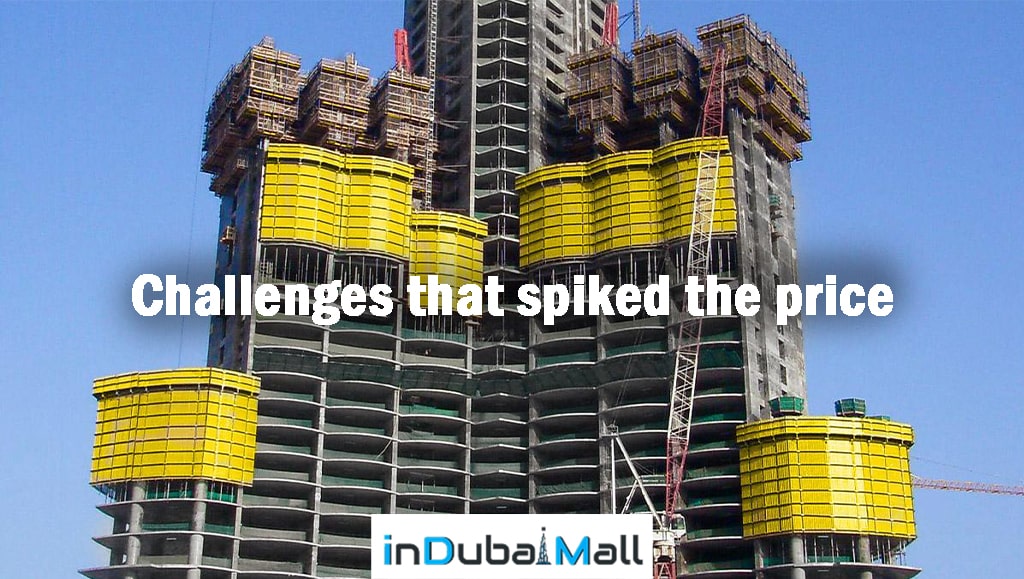
The tower’s height brought constant engineering challenges and they were raising the cost of Burj Khalifa. Also, unseen equipment was necessary for vertical concrete pumping. Engineers dealt with high-pressure differences, while they were expanding thermal loads, and strong wind forces at great heights. The building’s tapering design helped disrupt wind vortices. Unique concrete mixtures were developed in Burj Khalifa to prevent cracking from severe temperature changes in Dubai. The project demanded sophisticated engineering for its 57 elevators, which included 14 double-deck high-speed lifts. Each issue called for innovative solutions, driving up the overall cost.
The 2008 global financial crisis
The worldwide financial crisis of 2008-2009 caused a downturn in Dubai’s real estate market, as property values and developed projects dropped sharply, leading to a halt in investments for many projects. Burj Khalifa construction end date happened during this economic downturn, and it was leading to decreased demand, lower rents and sales soon after it opened, and financial difficulties for developers in order to earn their investments.
Design changes: height increase
While designers were working on the Burj Khalifa, changes made to the design during construction led to higher costs. Initially, the tower was supposed to be shorter than it is now, but developers and architects decided to increase its height in around 100 meters from the original plans. This change required more materials, engineering modifications, and additional work, resulting in unanticipated expenses for the project.
Raw material inflation (2004-2009)
During the construction of the Burj Khalifa from 2004 to 2009, (if you are wondering about how many years did it take to build Burj Khalifa), the rise in raw material prices played a major role in increasing the overall cost beyond of what it was initially estimated. For instance, iron prices increased about 75% within a year around 2008. It was fueled by high global demand and economic instability related to the broader downturn, which made it more costly for builders to obtain these crucial materials. Since the Burj Khalifa needed vast amounts of these materials such as hundreds of thousands of cubic meters of concrete and tens of thousands of tons of steel, the inflation in raw material prices added millions of dollars to the construction expenses, significantly impacting the final cost compared to early projections.