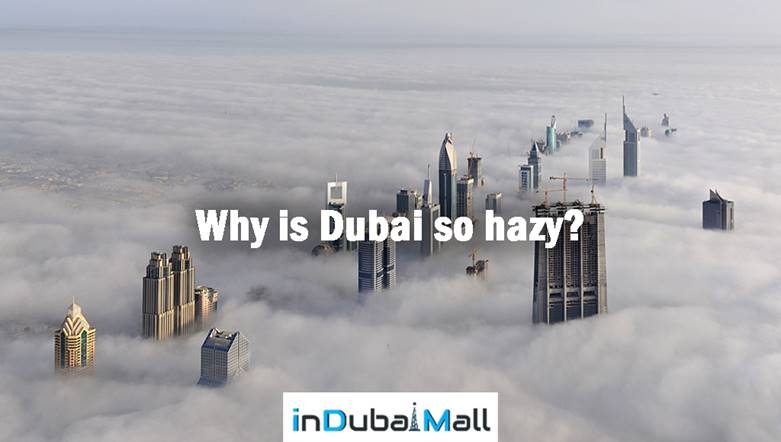
You’ve heard of Dubai with its bright lights, fancy cars, designer bags, and tall buildings, but when the shine wears off, many people living here confront the truth of life in the city. The air quality isn’t always good. On dusty days or in cramped, enclosed spaces, the impact is noticeable, influencing how people breathe and feel across the city. The dry desert climate is adjacent to the warm Gulf seas, where moist air is brought inland by the afternoon sea breeze, which is cooled by the desert’s surface at night. Why is Dubai so hazy? In this article, indubaimall will look into the causes of air pollution in Dubai, its impact on the city’s residents and visitors, and the measures being taken to tackle this problem.
Why does Dubai look so hazy?
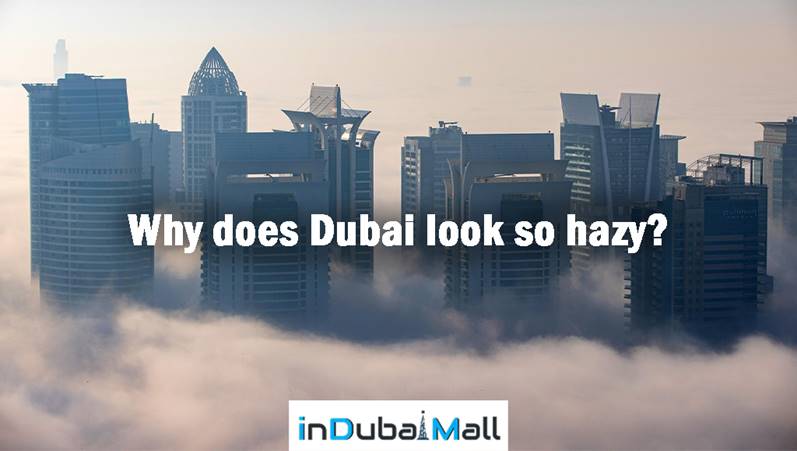
Visitors frequently observe that Dubai doesn’t always display the bright, deep-blue skies they envision from postcards or travel advertisements because it can appear hazy, light, dusty, or foggy. There are multiple reasons such as humidity and mist, dust and desert particles in the air, pollution and summer heat and humidity haze that visitors ask why is Dubai so hazy. However, if you are going Dubai for the first time, it seems so hazy. Also, the haziness of Dubai is not alwys; it is just in certain month that we explain clearly in the next parts.
First impression for tourists vs reality
Many tourists come to Dubai hoping for bright, clear blue skies every day, with sharp views of the skyline and perfectly clean horizons. However, what you will often see is a light haze, morning fog during the winter months, fine dust particles in the air for most of the year, and heat haze or mild smog in the summer, especially close to busy roads. Occasionally, stronger winds can also create dusty or sandy skies that reduce visibility. Although Dubai does have stunningly clear blue days, especially after rain or during calm, dry weather, but they are not guaranteed, and the sky often looks paler instead of a deep blue, even though the sunlight is bright and intense.
Is it always like this or just in certain month?
Is Dubai always hazy? Haze in Dubai is more frequent throughout the year, but its causes vary with the seasons. Why is dubai so hazy in September? In summer (May–September), haze results from extreme heat, high humidity, and fine dust, leading to a washed-out sky instead of fog. In spring and autumn, light dust in the air can reduce visibility on certain days, especially when the winds pick up. There are also many clear, bright days, especially after rain or during calm weather, but perfectly clear skies aren’t a daily guarantee.
The natural reasons behind Dubai’s haze
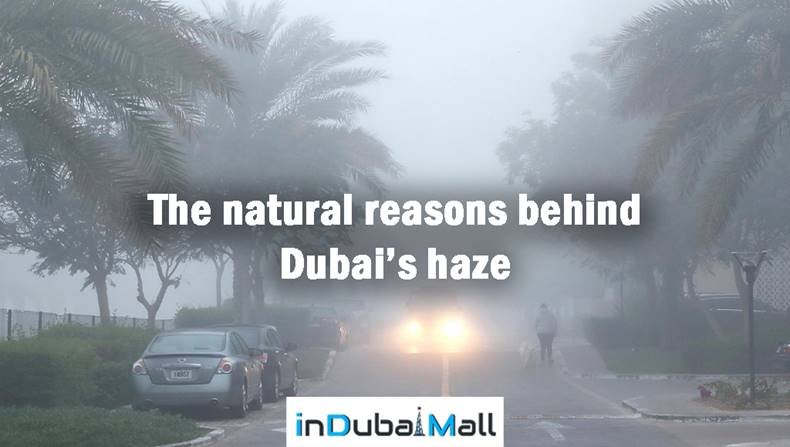
The haze in Dubai is mainly caused by natural environmental factors instead of ongoing cloud cover or pollution. The city is located between the desert and the sea, and this special geography is the most significant factor. Here are some natural reasons that are the reasons of why is Dubai so foggy?
Desert dust and sand carried by shamal winds
Dubai’s desert climate makes it very vulnerable to natural events such as sandstorms and dust storms which greatly affect air quality. These storms transport tiny dust and sand particles from the nearby desert into the city, while it is leading to decreased visibility and increased air pollution levels. The tiny dust particles, referred to as PM10, can be breathed in and may cause respiratory problems, especially for individuals with existing conditions such as asthma. These particles remain in the air long after the sandstorms have ended, further diminishing the city’s air quality.
Humidity, sea breeze and coastal fog over a desert city
When rising warm air from the desert encounters the cooler breeze from the sea, the moisture in the air quickly condenses. This is similar to the ‘misty eyeglasses phenomenon’ you notice when you step outside from an air-conditioned room. During this time, especially in the early morning, humidity can reach as high as 90 percent. When this high moisture combines with the fine sand and silica particles in the air (carried by the breeze), it turns the mist into the thick fog that lingers for a long time.




Seasonal patterns: Summer dust vs winter fog
During summer (approximately May to September), the intense heat dries out the desert, making it easy for fine sand and dust to be lifted into the air, even with gentle breezes. Is Dubai dry or humid? The high humidity along the coast causes these particles to stay suspended and scatter sunlight, resulting in a constant dusty or heat haze that can persist throughout the day.
In winter (from December to March), nighttime temperatures drop while humidity from the Arabian Gulf stays high. This causes moisture to form near the ground, and it is leading to early-morning fog or mist, particularly in lower and coastal regions. Unlike the summer haze, winter fog is typically short-lived and dissipates by mid-morning as the sun heats the air, often revealing much clearer skies for the remainder of the day.
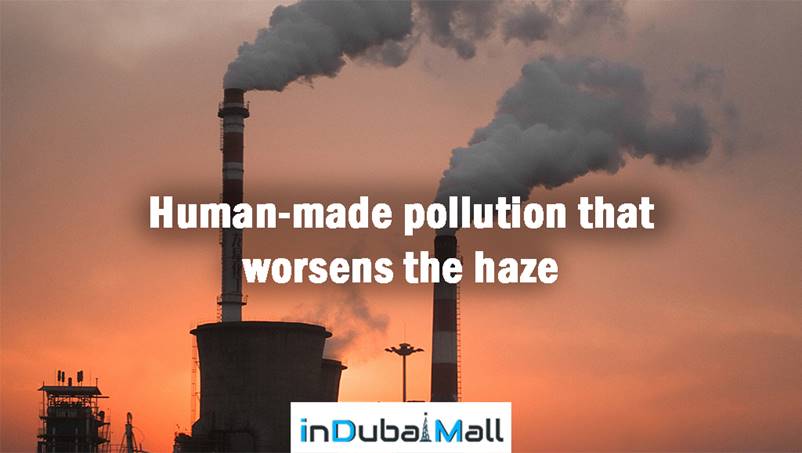
Human-made pollution that worsens the haze
Even with its advanced infrastructure and contemporary way of life, Dubai air pollution has turned into a major environmental and public health concern over time. The main reasons for Dubai’s bad air quality and haze are linked to several human-induced factors.
Traffic and vehicle emissions on Dubai’s roads
Like many large cities, vehicle emissions are a major cause of air pollution in Dubai. The city has a lot of private cars on the roads, which leads to traffic jams and higher emissions of nitrogen oxides (NOx), carbon monoxide (CO), and particulate matter (PM). Even though Dubai has put money into public transport options such as the Dubai Metro, buses, and taxis, but many people still depend on private cars. Dubai’s transport system relies heavily on fossil fuels, which adds to air pollution. When these pollutants mix with high heat and sunlight, they worsen smog formation, resulting in poor air quality.
Construction dust from constant urban development
Dubai has seen remarkable growth and development in recent decades, but this has led to significant environmental damage. The city’s swift urban expansion is characterized by extensive construction projects, which significantly contribute to its poor air quality. Building skyscrapers, residential areas, and infrastructure generates large quantities of dust and particulate matter (PM), while it is posing risks to human health and the environment.
Industrial areas, power stations and destination plants
Dubai hosts various industrial zones and manufacturing sectors such as oil refineries, cement production, and metal processing. These industries emit pollutants into the air, that are including sulfur dioxide (SO2), nitrogen oxides (NOx), and particulate matter. The closeness of industrial activities to residential areas worsens the issue, as pollutants can easily drift into crowded zones.