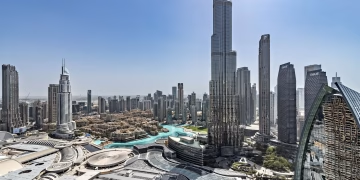
Dubai is a city in the United Arab Emirates (UAE) and it is famous for its opulent lifestyle, cutting-edge buildings, and lively nightlife. It attracts a lot of tourists and serves as a major center for business and trade in the Middle East. Islam is the official religion of the United Arab Emirates, and Dubai is one of the cities within that federation. Most people in Dubai practice Islam, and the culture of the people is strongly influenced by Islamic customs and traditions. Is Dubai a Muslim country? Dubai is not a Muslim country, but rather a Muslim city situated within the United Arab Emirates. Have you ever thought about experiencing a place where old traditions and Islam come together with modern comfort and elegance? Let’s explore Dubai in this blog on Indubaimall.
Muslim Population in Dubai
Is Dubai a Muslim country? Is Dubai a strict Muslim country? In fact, Islam is the official religion of the United Arab Emirates, and Dubai is one of the cities. Some people often ask, “Does Dubai have sharira law?”, given its Islamic heritage. Because of this, you can find many mosques throughout the city. According to a 2020 estimate, more than 56% of Dubai religion percentage identifies as Muslim, 25% are Christian, 16% are Hindu, and 2% follow other religions.

Role of Islam in Dubai’s Culture and Society
In the early 8th century, Islam began to spread throughout the UAE and dubai. It soon became the main religion in the region. Islamic teachings helped people build stronger connections and develop a sense of cultural identity. Dubai Islamic heritage is present in many places.
Whether in busy markets or quiet mosques, the influence of Islam is clearly visible. This reflects how deeply Islam has shaped the country. Islam promoted honesty and fairness, which helped the UAE’s economy grow. Trade in items such as pearls and spices thrived. These Islamic values also influenced how Dubai was governed and how people interacted with each other. Festivals such as Ramadan and Eid al-Fitr became important social events of Dubai. They brought communities together through shared faith and traditions. Today, visitors to iconic sites such as the Burj Khalifa must also respect cultural norms, and something like Burj Khalifa dress code is reflecting the city’s blend of modernity and tradition. The UAE has a rich Islamic history, with tribes such as the Azd settling along the coastline.

Islamic Practices in Daily Life
Islamic culture is at the heart of life in the United Arab Emirates, and it is influencing the way people live, interact, follow laws, and preserve traditions. In the following, there are some Islamic practices by Dubai Muslim population that you can see in Dubai:




- Muslims pray five times each day.
- Mosques can be found all over the country, and the prayer times and the azan is announced through loudspeakers.
- The official day of rest is Friday, known as Jumu’ah, a sacred Muslim day, during which people attend prayers at the mosque, or masjid.
- Sharia law, which is Islamic law, has a significant role in the legal system, particularly in areas like marriage, family, inheritance, and social conduct.
- The traditional clothing of the UAE people reflects Islamic culture. Men typically wear a kandura, which is a white robe, along with a ghutra, a headscarf. Dubai Muslim girl and women usually wear an abaya, a long black robe, and often cover their heads with a hijab or niqab. Tourists are encouraged to follow the Dubai dress code, especially in public, religious, or traditional places.
- Communication between men and women who are not close is usually kept at a respectful distance.
- Certain social behaviors such as drinking alcohol in public, having sexual relations outside of marriage, and showing affection in public like kissing or hugging, is considered inappropriate and sometimes it is illegal.
- Ramadan is the holiest month in Dubai, and during this time, Muslims fast from sunrise until sunset, and they avoid eating, drinking, smoking, and having any form of sexual activity during the day. Once the sun has set, the muslims break their fast with Iftar, which is usually a time for family and community to come together.
Dubai’s Multicultural and Multi-Religious Nature
Dubai’s culture is a mix of many different traditions from various backgrounds. It has strong ties to Bedouin sayings, Islam, trade, customs, hospitality, and family values. The culture of Dubai is deeply rooted in Arab traditions and Islamic values, which have a big influence on global trends. This mix makes Dubai a vibrant and diverse city where old traditions and modern life come together. Dubai is a global city where more than 200 different nationalities live and work, while they are making it a place where many cultures live together peacefully. People are allowed to follow their own religions, and you can find churches, temples, mosques, and other places of worship throughout the city. Visitors are also expected to respect local norms such as the Dubai mall dress code, which reflects the city’s blend of tradition and modernity.

Common Misconceptions About Dubai and Islam
Common misunderstandings about Dubai and Islam often come from not knowing much about the region’s culture. There are some misconceptions in the following that usually miss the fact that Dubai is modern, open, and combines tradition with a strong global presence
- Many people think Dubai is very strict, but it’s actually one of the most modern and diverse cities in the Middle East, and it welcomes people from all backgrounds. However, Visitors are expected to respect local norms such as the Dubai dress code for male.
- Another common belief is that Islamic culture limits women’s freedom, but in Dubai, women work, drive, study, and take an active part in society.
- Some also think Dubai is unsafe because of issues in other parts of the region, but the country is actually very safe and stable.